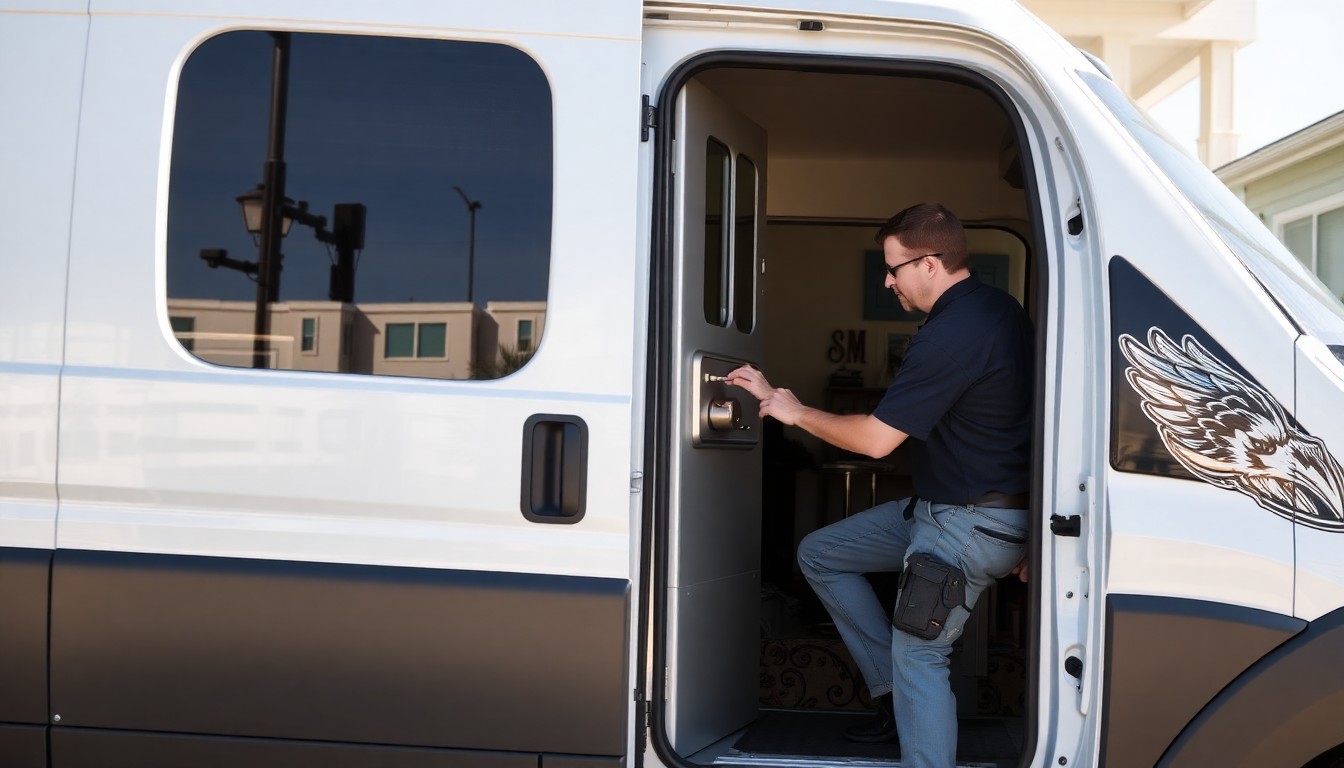
Service Across the 30A Scenic Corridor
The lock problems out here are different from an ordinary town. The corridor runs on vacation rentals that turn over every Saturday, so we spend a lot of time on smart-lock resets, dead-battery keypads, jammed lockboxes, and bad guest codes — usually a quick fix that gets a family inside without damaging the hardware. And the gulf salt air is brutal on door hardware: cheap builder-grade deadbolts pit, seize, and fail within a couple of seasons on gulf-facing doors, so lock replacement with corrosion-resistant hardware is a steady part of what we do.
What We Do
Emergency lockouts, lock rekeys, car key replacement and programming, residential security upgrades, commercial master key systems, panic bar service, smart lock installation, and key fob programming. The full residential, automotive, and commercial scope, with 24/7 emergency response. Pricing is always quoted on the phone before we dispatch — every lock, vehicle, and door is different, so we give you a real, all-in number instead of a teaser rate that changes in the driveway.
Our 30A Locksmith Services
Explore each service for what we do, where we do it, and straight answers before you call.
Why 30A Locksmith
We are a mobile locksmith service built around one road and the communities strung along it. That is a deliberate limit rather than a modest one. A corridor this narrow, this seasonal and this hard on hardware behaves differently from anywhere else in the county, and a service that works here has to be organised around those differences rather than treating them as edge cases.
What that means in practice: we carry stock chosen for coastal doors instead of generic builder hardware. We expect keypads and lockboxes, because most of the doors here have them. We expect Saturday changeovers, because that is when the corridor turns over. And we quote on the phone before dispatching, because a figure that changes in the driveway is the oldest trick in this trade and we would rather not be in that conversation.
What the 30A corridor does to locks
Three forces act on almost every lock along this road, and between them they explain most of the work we do.
Salt air, continuously. Not just during storms — every day, carried inland on the prevailing breeze. It corrodes lock internals from the inside: springs lose tension, pins pit, and cylinders stiffen. Builder-grade plated hardware pits and fails within a couple of seasons on gulf-facing doors, and once the finish is compromised the decline accelerates. This is why we push corrosion-resistant hardware on exposed openings and why we are unenthusiastic about the cheapest option on a door facing the water.
Turnover. Rental doors are operated by strangers several hundred times a season. Nobody who uses them has any reason to be careful with them, because they are not theirs, and every one of those cycles is a full working of a latch, a closer and a set of hinges.
Humidity and seasonal movement. Wood-core doors take on moisture through summer and grow. A bolt that threw cleanly in March is catching by August, and a door that binds on the frame is being stopped by friction before its latch ever reaches the strike. A great many “the lock is broken” calls in August are doors that have simply swollen.
Add one human factor and the picture is complete: the single most common self-inflicted damage we see is general-purpose penetrating oil sprayed into a stiff lock. On a beach it is the worst possible choice, because airborne sand sticks to the oil film and grinds the mechanism to pieces. Use a dry lubricant — graphite or a dry PTFE-type lock spray — and a lock that would have failed in a season will run for years.
The work, in plain terms
Lockouts. Houses, rentals, vehicles and businesses. Non-destructive entry is the objective and the norm; damage usually enters the picture when a door has already been forced, a lock has been oiled, or a broken key has been pushed deeper before the call. If anyone is shut inside a vehicle — a child, an older person, a pet — call 911 first, always, before any locksmith. Heat inside a closed car here becomes dangerous within minutes.
Rekeying. Changing what a cylinder recognises while keeping the hardware in place. It is cheaper than replacement, it does not disturb the look of a door, and it is the right answer whenever the number of existing keys has become unknown: a purchase, a change of cleaner or manager, the end of building work, or a key that did not come back.
Lock changes and installation. When hardware is worn out, corroded, or was never right for the opening. On exposed doors this is a specification conversation as much as a fitting one, because the wrong metal in this air is a repeat visit.
Car keys. Cutting and programming at the vehicle. A modern car key is two separate things — a mechanical blade and an electronic credential — and both have to be right before the car moves. A spare made while you still have a working key costs a fraction of a key made after every key is gone.
Commercial work. Storefront hardware, exit devices, closers, master key systems and key control for the shops, cafes and small offices along the road.
Safes. Residential safe lockouts for most common domestic models. Some high-security commercial safes need specialist attention, and we will tell you when that is the case rather than experimenting on it.
What happens when you call
- You describe the problem. What the door or vehicle is actually doing matters more than what you think is wrong with it. “The code is accepted but the door will not open” and “the keypad is dead” are entirely different faults.
- We tell you where you stand. Sometimes the answer is that you do not need us — the property manager has a code, the spare is twenty minutes away, or the remote just needs a battery. We would rather say that than take the call.
- We quote before dispatching. A real, all-in number for the job as described, on the phone, before anyone gets in a van.
- We confirm you are entitled to the access. Identification, and something linking you to the property or vehicle: a lease, a deed, a booking confirmation, a registration, or the manager confirming directly.
- The work gets done and explained. If we find the real fault is somewhere other than where you thought — a strike rather than a lock, a pivot rather than a cylinder — we will show you.
How to tell a real locksmith from the other kind
This trade has a well-known problem with operators who advertise a low figure, arrive, and then produce a much larger one on the doorstep when you are least able to argue. It is worth knowing what to look for, whoever you end up calling.
- A firm quote on the phone, for the job as you described it, before anyone travels. Vagueness here is the single clearest warning sign.
- A business name given when the phone is answered — not “locksmith service”.
- Questions about who you are. A locksmith who does not care whether the property is yours would not care if a stranger called about yours either.
- Willingness to say a job is not theirs. Openers and springs are a garage door company's work; some safes need a specialist; some vehicles genuinely need a dealer. Anyone who says yes to everything is telling you something.
- Drilling as a last resort, not a first move. Most residential lockouts do not require destroying the lock.
- Identification on arrival. Ask. It is a normal request and any legitimate technician expects it.
Along the corridor
The road runs a long way and the properties along it are not all the same. The stretch is a mix of rental-heavy communities where the doors are keypads and the calls cluster on changeover days, established residential pockets where the work is ordinary house locksmithing on hardware the salt has been chewing for years, and small commercial clusters where a storefront failing means a business not opening.
What does not change anywhere along it is the environment. Every community on this list gets the same salt, the same summer humidity and the same seasonal swing between constant use and months of stillness. A lock left untouched through a humid summer is stiffer than the person turning it expects, and that is where broken keys come from.
Pick your area below for local detail, or simply call — describing where you are in plain terms is quicker than finding a page.
30A Neighborhoods We Serve
We cover the whole corridor and the neighborhoods behind it. Pick your area for local detail.